


Selling a home as is sounds simple. You skip the work, accept the home will sell for less, and move on faster. In practice, the calculation is more nuanced. Some homes sell well as is. Others lose far more value than the preparation would have cost. Knowing which category your home falls into is the key decision.
As is selling makes the most sense in three specific situations. First, when the home needs major work, like a new roof, foundation repair, or significant remodeling, that exceeds the seller’s ability to fund or manage. Second, when the seller’s timeline is too short to complete improvements before listing. Third, when the home is being sold by an estate, trust, or party with limited authority to invest in repairs.
Outside those situations, the choice is usually a tradeoff between time and money. Selling as is takes less time and effort upfront. Selling with preparation takes weeks and some investment but typically produces a higher net result. The question is whether the seller’s time, energy, or available capital makes preparation feasible.
There is a common misconception that as is means the seller is not responsible for disclosure. Washington law requires the same Form 17 disclosure regardless of how the home is marketed. As is means the seller is not promising to make repairs, but it does not eliminate disclosure obligations. Sellers who treat as is as license to hide problems create legal exposure after closing.
Buyer reaction to as is listings varies by market and price point. In the greater Seattle area, including Bothell, Mill Creek, and Kenmore, as is listings draw a narrower buyer pool. Many financed buyers cannot easily purchase homes that fail standard lender condition requirements. Cash buyers and investors dominate the as is market, and they expect significant discounts. The price gap between as is and prepared sales is typically larger than sellers expect.
Pricing an as is home correctly is harder than pricing a typical home. The comparable sales analysis has to focus on similar condition recent sales, not generic neighborhood comps. The list price has to reflect the work the buyer will inherit, plus a margin for the unknowns that always emerge in older or distressed homes. Overpriced as is listings sit much longer than overpriced standard listings, because the buyer pool is smaller and more value sensitive.
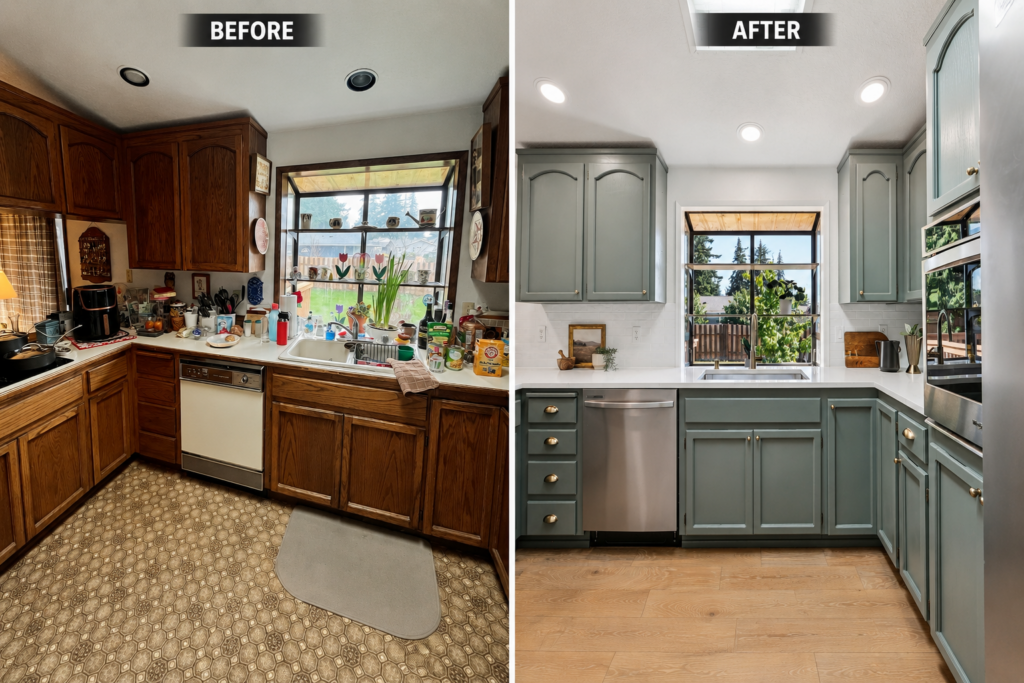
A middle path exists between full preparation and pure as is. Limited preparation, focused only on safety, cleanliness, and the most visible cosmetic issues, often produces a meaningfully better result than pure as is at modest cost. Replacing broken light fixtures, fixing obviously damaged flooring, deep cleaning, and decluttering can be done in a few weeks with limited investment. The home is still marketed as is for condition, but the presentation does not actively repel financed buyers.
The cleanest way to evaluate the choice is to get two opinions. What would the home sell for as is, and what would it sell for with a defined preparation budget? The gap between those numbers, minus the preparation cost, is the net benefit of preparation. If the gap is large, preparation makes sense. If it is small, as is may be the right call. The decision should rest on actual numbers, not assumptions about what is easier.
Request Your Home Value Analysis & Selling Strategy → What’s My Home Worth
Gevin Frey — Realtor®
Frey&Co. Homes
Serving Bothell, Mill Creek, Kenmore, and surrounding communities


